


News
Get your terrace ready for Spring 2026: the commercial outdoor cover checklist
If you rely on outdoor seating, February is the month to plan – not when the first warm weekend hits and you’re trying to solve wind, rain and glare in a rush. Commercial outdoor cover works best when the roof type, layout, fixings and weather protection are designed together, so you can open earlier, trade later, and keep tables usable when the weather turns.
1. Start with the outcome (not the product)
Before you choose an awning or pergola, decide what you need the space to do:
- Add more covers (extra tables) without sacrificing circulation routes for staff.
- Keep trading in light rain (and reduce cancellations).
- Reduce wind chill so customers actually stay seated.
- Improve kerb appeal and brand visibility from the street.
Once the outcomes are clear, it’s much easier to choose the right system and avoid over‑ or under‑specifying the cover.


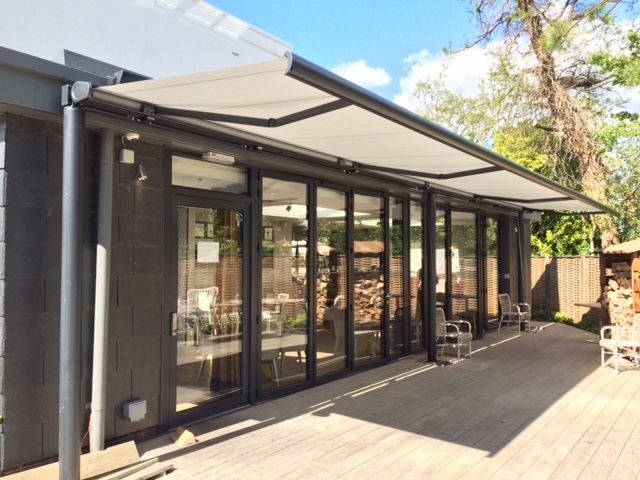
2. Choose your roof type (static vs retractable)
Most commercial projects fall into one of these routes:
Retractable Roof Pergolas (best all-round flexibility)
A retractable electric fabric pergola gives a “proper room” feel with permanent posts and a roof that opens and closes, so you can run open‑air when it’s nice and close up when you need protection. Many systems also build in integrated drainage, helping control runoff rather than letting water sheet off the front edge.
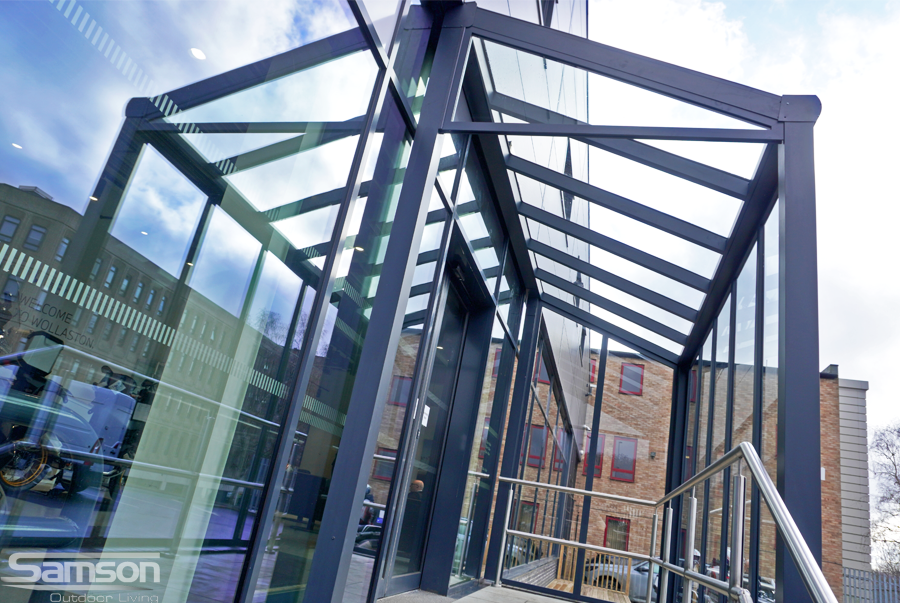
Fixed Roof Structures (best for guaranteed cover, every day)
If your priority is permanent rain protection with minimal day‑to‑day operation, a fixed roof (glass, polycarbonate or louvred) can be the most straightforward way to protect larger areas and walkways. This approach is common where you want the area to look “built in” and you don’t want staff thinking about opening or closing a roof during service.
Retractable awnings (best for shopfronts and tighter façades)
A commercial retractable awning is ideal when you want strong frontage impact, branded valances, and fast sun/rain cover directly over a window line or pavement seating. They are also a great choice when you have a clean wall to fix into and you want a simpler solution than a post‑supported roof.
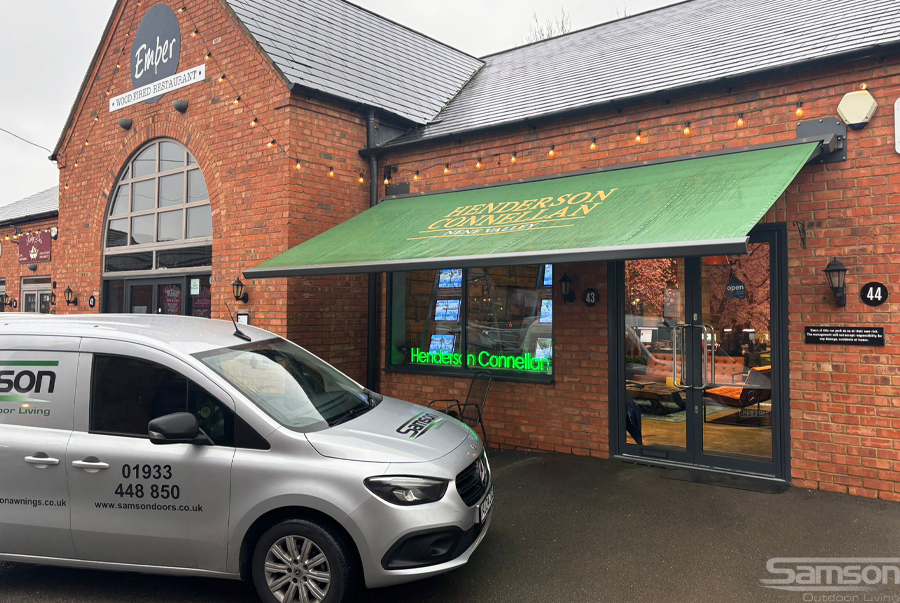
Build In Branding and Kerb Appeal
Commercial cover should earn its keep visually as well as practically. Branded retractable awnings can increase recognition and improve the look of the frontage, helping you stand out to passing traffic and pedestrians. If you’re investing in a new terrace system, make sure it supports your identity with colour choices, fabric selection and branding options where applicable.


3. Don't ignore wind and side protection
British weather is famously changeable, and wind is usually what stops outdoor areas being used – even when it isn’t raining. A roof alone helps, but the biggest comfort jump often comes from adding side and front protection to block gusts and low sun.
What to consider:
- Side screens or vertical blinds to cut wind and glare without making the area feel boxed in.
- Front protection options for more exposed aspects, especially on corners and rooftops.
- Layout planning: where wind funnels between buildings, and where customers will feel it most.
Some commercial retractable pergola systems are described as proven to withstand higher wind
forces, but performance always depends on correct specification and installation for the site.
4. Add the upgrades that extend trading hours
If you want outdoor seating to work beyond sunny lunchtime hours, plan these now:
What to consider:
- Integrated LED lighting for evenings and darker afternoon.
- Layout planning: where wind funnels between buildings, and where customers will feel it most. Heating options to take the edge off and keep the space viable in shoulder seasons.
These are not “luxury extras” in hospitality; they are often the features that keep tables occupied when the temperature drops.
5. The ''fast quote'' site checklist
To recommend the right system quickly (and avoid a redesign later), it helps to have these details ready:
- Approximate width and projection/depth you want to cover.
- Photos from inside looking out, and from outside back towards the building.
- Approximate width and projection/depth you want to cover.
- Photos from inside looking out, and from outside back towards the building.
- Fixing surface details: solid wall, cladding, steelwork, or whether a freestanding solution is required.
- Ground/base type: concrete, paving, tarmac, decking (and whether you can install foundations)
- Exposure: sheltered courtyard, open beer garden, rooftop, coastal.
- Your must‑have: rain cover, retractable sun control, wind protection, branding, lighting and/or heating.
6. Febuary action: plan now, install before the rush
Spring and summer enquiries always compress timelines. If you want outdoor space ready for the first busy weekends, get the design decisions locked in early – roof type, posts (if needed), drainage, and side protection – then the installation becomes a straightforward delivery plan rather than a last‑minute scramble. Call us today at 01933 448854 or send us a message to find out more and get a quote.